%20(1).jpg)

Las Vegas Pool Gate Requirements & Safety: What Homeowners Should Know

Updated: Sep 2
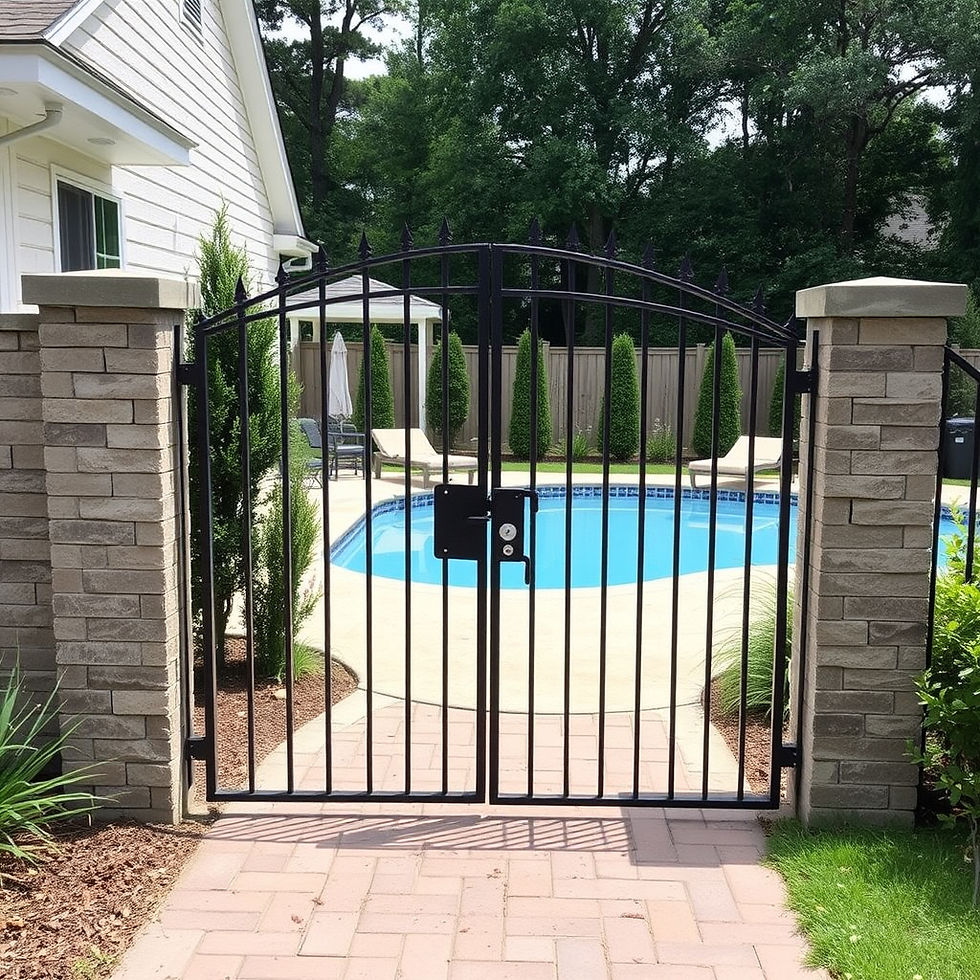
What should a safe pool gate look like in Las Vegas? A backyard pool gate should help prevent unsupervised access to the pool area. Important safety features include an adequate barrier height, a non-climbable design, outward gate swing, and a gate that automatically closes and positively latches without someone having to pull it shut.
Pool barriers are especially important for families with young children. The CDC reports that drowning is the leading cause of death for U.S. children ages 1–4, and most drownings in this age group occur in swimming pools.
At Absolute Home Inspections, we inspect homes with swimming pools throughout Las Vegas, Henderson, North Las Vegas, Summerlin and surrounding Southern Nevada communities. During pool inspections, gate and barrier deficiencies are among the safety conditions we evaluate.
Below are the pool-gate conditions Las Vegas homeowners and homebuyers should understand.
What Are the Pool Gate Requirements in Las Vegas?
Pool barrier requirements in Southern Nevada can depend on the property's jurisdiction, construction date, permit history and other factors. Las Vegas, Henderson, North Las Vegas and unincorporated Clark County may administer locally adopted requirements.
Southern Nevada residential pool standards generally call for barriers designed to restrict unsupervised access to the pool area. Important gate features include:
An appropriate pool barrier height
A gate that opens away from the pool
Self-closing operation
Self-latching operation
Latch placement designed to make access more difficult for young children
Openings and designs that discourage climbing or squeezing through
A gate that closes and latches from an open position
Homeowners should verify current requirements for their specific property with the applicable local building department when code compliance or permitting is in question.
A home inspection is not a municipal code-compliance inspection, but visible safety concerns with pool barriers and gates can still be extremely important.
How Tall Should a Pool Gate Be in Las Vegas?
Southern Nevada regional residential pool guidance generally shows a minimum 5-foot-high pool barrier for applicable single-family residential installations.
However, homeowners should not assume that one measurement applies to every property. Requirements can vary based on jurisdiction, property type, construction date and applicable code.
During a home inspection, we are primarily concerned with whether the visible barrier provides an effective layer of protection against unintended access to the pool.
A gate can be tall enough and still be unsafe if it does not close, latch properly or resist climbing.
Should a Las Vegas Pool Gate Be Self-Closing and Self-Latching?
Yes. Self-closing and self-latching operation is one of the most important pool-gate safety features.
A properly operating gate should:
Close by itself
Fully return to the closed position
Engage the latch automatically
Remain securely latched after closing
Operate without someone having to push or pull it closed manually
One of the problems we look for during Las Vegas pool inspections is a gate that appears functional but stops just short of engaging the latch.
A gate that only works when someone remembers to pull it shut defeats much of the protection provided by a self-closing barrier.
Which Direction Should a Pool Gate Open?
A pool access gate should generally open outward, away from the pool area.
This provides an additional layer of protection because pressure against the outside of the gate does not simply push it open toward the pool.
Southern Nevada's regional residential pool guidance specifies outward-opening gates for applicable installations.
During an inspection, an inward-swinging gate may therefore warrant additional evaluation depending on the property's age, location and applicable requirements.
Where Should the Pool Gate Latch Be Located?
The purpose of latch placement is to make it difficult for a young child outside the pool enclosure to operate the gate.
Southern Nevada regional guidance includes specific requirements for latch height and placement depending on gate design. For example, some configurations place the latch on the inside of the gate and protect it from exterior access.
Rather than relying on a single latch-height number for every property, homeowners should consider:
Whether a young child can reach the latch
Whether openings in the gate allow someone to reach through
Whether the latch is protected from exterior access
Whether it positively engages every time the gate closes
Whether modifications have defeated the original safety design
If there is a question about whether an existing gate meets current local requirements, the appropriate building department or qualified pool professional should be consulted.
Should a Pool Gate Be Difficult for Children to Climb?
Yes. A pool barrier should not provide easy footholds or handholds that allow a young child to climb over it.
Potential concerns include:
Horizontal rails on the exterior side
Decorative openings that act like ladder rungs
Chain-link or other easily climbable configurations
Large openings
Nearby walls or structures that provide climbing assistance
Even a well-designed gate can become easier to climb when objects are placed next to it.
What Should Be Kept Away From a Pool Gate?
One of the simplest pool-safety improvements is keeping climbable objects away from the barrier.
Avoid placing items such as:
Patio furniture
Chairs
Tables
Planters
Storage containers
Pool equipment
Toys
Ladders
next to the outside of a pool gate or barrier.
A five-foot barrier offers considerably less protection if a child can use a chair or planter to climb part of the way up it.
How Do You Test a Self-Closing Pool Gate?
A simple way to evaluate a self-closing gate is to open it to several different positions and allow it to close without assistance.
Observe whether the gate:
Moves toward the closed position on its own
Reaches the latch without assistance
Positively engages the latch
Remains securely closed
Test the gate from more than one open position.
A gate that closes properly from fully open but fails to latch when opened only several inches may still create a safety concern.
Homeowners should periodically check gate operation because hinges, springs and latches can change as components wear, settle or become misaligned.
Why Do Pool Gates Stop Self-Closing?
Pool gates can stop operating correctly for several reasons, including:
Worn or weak self-closing hinges
Misaligned latches
Gate or post movement
Loose hardware
Corrosion
Landscaping interfering with gate movement
Debris beneath the gate
Improper modifications
Components being intentionally disabled
Las Vegas heat and outdoor exposure can also be hard on gate hardware and other exterior components.
A gate that worked properly several years ago should not automatically be assumed to still function correctly today.
Should a Pool Gate Be Locked?
A lock can provide an additional layer of protection when the pool is not in use, particularly in homes with children or frequent young visitors.
However, a lock should not be treated as a substitute for a properly functioning self-closing and self-latching gate.
The strongest approach to pool safety is multiple layers of protection rather than relying on one device.
Does a Pool Fence Replace Adult Supervision?
No.
Pool barriers are designed to reduce the chance of unsupervised access. They do not replace active adult supervision.
The CDC recommends four-sided pool fencing that separates the pool from the house and yard, along with self-closing and self-latching gates. The CDC reports that four-sided isolation fencing can substantially reduce a young child's drowning risk compared with fencing that surrounds only the property.
Pool safety works best through multiple layers:
Active adult supervision
Effective pool barriers
Self-closing and self-latching gates
Appropriate door and window protection
Swimming and water-safety skills
Emergency preparedness
No single safety feature should be considered sufficient by itself.
What If the House Forms Part of the Pool Barrier?
This is an important issue in many Las Vegas homes.
When a home provides direct access to the pool area through doors or windows, additional safety measures may be appropriate or required depending on the property and applicable standards.
These can include:
Door alarms
Window alarms
Self-closing or self-latching doors
Approved safety covers
Other permitted protective measures
At Absolute Home Inspections, we also evaluate visible pool-access safety features during applicable inspections.
A gate around one portion of the yard does not eliminate concerns created by direct access to the pool from inside the home.
What Are Common Pool Gate Problems Found During Las Vegas Home Inspections?
During Las Vegas-area inspections, pool gate and barrier concerns can include:
Gates that do not self-close
Gates that close but fail to latch
Damaged or missing latch hardware
Latches that are easy for children to reach
Gates that swing toward the pool
Loose or damaged gate components
Large openings in the barrier
Climbable barrier designs
Furniture or planters positioned next to the barrier
Gates intentionally tied or propped open
Landscaping interfering with gate operation
Modifications that compromise the original safety design
Some of these problems are relatively inexpensive to correct, but they can represent significant safety concerns.
Will Absolute Home Inspections Check the Pool Gate?
When a pool inspection is included with the inspection, Absolute Home Inspections evaluates visible and accessible pool barriers and gates for safety concerns and basic operation.
Depending on accessibility and conditions, this can include evaluating:
Gate operation
Self-closing function
Self-latching function
Gate swing direction
Visible latch placement
Barrier condition
Visible openings and climbability concerns
Access from the home to the pool area
Other readily observable safety deficiencies
Our inspection is visual and non-invasive. It is not a municipal code-compliance inspection or a substitute for evaluation by the authority having jurisdiction when formal code compliance needs to be established.
Are Pool Gates Required on Older Las Vegas Homes?
Older homes can present a complicated situation because pool barriers may have been installed under earlier standards or modified over time.
The fact that a pool or gate has existed for many years does not necessarily mean it meets today's requirements—or that it is unsafe solely because it differs from current construction.
During a home inspection, we focus on identifying visible safety concerns and explaining them to the buyer.
When determining whether an older installation is legally compliant, permitted or grandfathered, homeowners should consult the applicable local building authority.
What Should Homebuyers Look for When Buying a Las Vegas Home With a Pool?
Before purchasing a Las Vegas home with a pool, look beyond the water and pool finish.
Pay attention to:
Pool barriers
Gate operation
Latches
Direct access from the home
Door and window safety features
Pool equipment
Electrical safety
Decking and coping
Visible pool-shell condition
Drain and suction safety features
A beautiful pool can still have significant safety or maintenance concerns.
For buyers who are purchasing a home with a pool, adding a pool and spa inspection provides considerably more information than evaluating the home alone.
Las Vegas Pool Gate Safety FAQs
Are pool gates required in Las Vegas?
Pool barriers and access controls are required for applicable swimming-pool installations in Southern Nevada, but the exact requirements can depend on jurisdiction, property type, construction date and applicable code. Homeowners seeking formal code-compliance guidance should verify requirements with their local building department.
How tall should a Las Vegas pool gate be?
Southern Nevada regional residential pool guidance generally shows a minimum five-foot barrier for applicable single-family residential pools. Specific requirements should be verified for the individual property and jurisdiction.
Does a pool gate need to close by itself?
A properly designed pool gate should self-close and positively self-latch without someone manually pulling it closed.
Should a pool gate swing toward or away from the pool?
Pool gates should generally swing outward, away from the pool area. Southern Nevada regional residential guidance specifies outward-opening gates for applicable installations.
Does a pool gate have to latch automatically?
Self-latching operation is an important safety feature. The latch should engage when the gate closes without requiring someone to manually secure it.
How often should I test my pool gate?
Homeowners should check gate operation regularly and whenever they notice changes in alignment, closing speed or latch operation. Gate hardware can wear or shift over time.
Can furniture be placed next to a pool fence?
Climbable objects should be kept away from the outside of pool barriers because furniture, planters and similar objects can give children a way to climb over an otherwise effective barrier.
Do I still need door alarms if I have a pool gate?
Possibly. When doors or windows from the home provide direct access to the pool area, additional protection may be required or advisable. The appropriate protection depends on the property and applicable local requirements.
Does a home inspection determine whether my pool is up to code?
No. A home inspection is not a municipal code-compliance inspection. Inspectors identify visible safety concerns and deficiencies. Formal determination of current code compliance should come from the applicable building authority or another qualified professional.
Why Pool Gate Safety Matters in Las Vegas
A pool gate is easy to overlook because homeowners may use it every day without thinking about how it operates.
But for a young child, the difference between a gate that closes and latches every time and one that remains partially open can be critical.
The CDC identifies proper pool fencing as an important drowning-prevention measure, and the Consumer Product Safety Commission recommends multiple layers of protection around residential pools.
For Las Vegas homeowners, maintaining the gate and barrier should be treated as an ongoing safety responsibility—not something that is checked only when the pool is installed.
Schedule a Las Vegas Home and Pool Inspection
Absolute Home Inspections provides buyer, new-construction and warranty inspections throughout Las Vegas, Henderson, North Las Vegas, Summerlin and surrounding Southern Nevada communities.
For homes with pools, a pool and spa inspection can be added to evaluate visible pool components, equipment and important safety features, including accessible barriers and gates.
Our inspections are designed to give buyers clear, practical information about the property so they can make informed decisions.
About the Author

Jason Henderson — Certified Master Inspector
Jason Henderson is the owner of Absolute Home Inspections and a Certified Master Inspector serving Las Vegas and Southern Nevada. Jason and the Absolute Home Inspections team perform buyer, new-construction, warranty, pool and spa inspections throughout the Las Vegas Valley.
Through thousands of hours spent inspecting Southern Nevada homes, the team has firsthand experience evaluating common pool and spa concerns, including barrier and gate deficiencies, equipment issues, coping and decking concerns, drainage conditions, electrical safety and other visible defects.



Comments